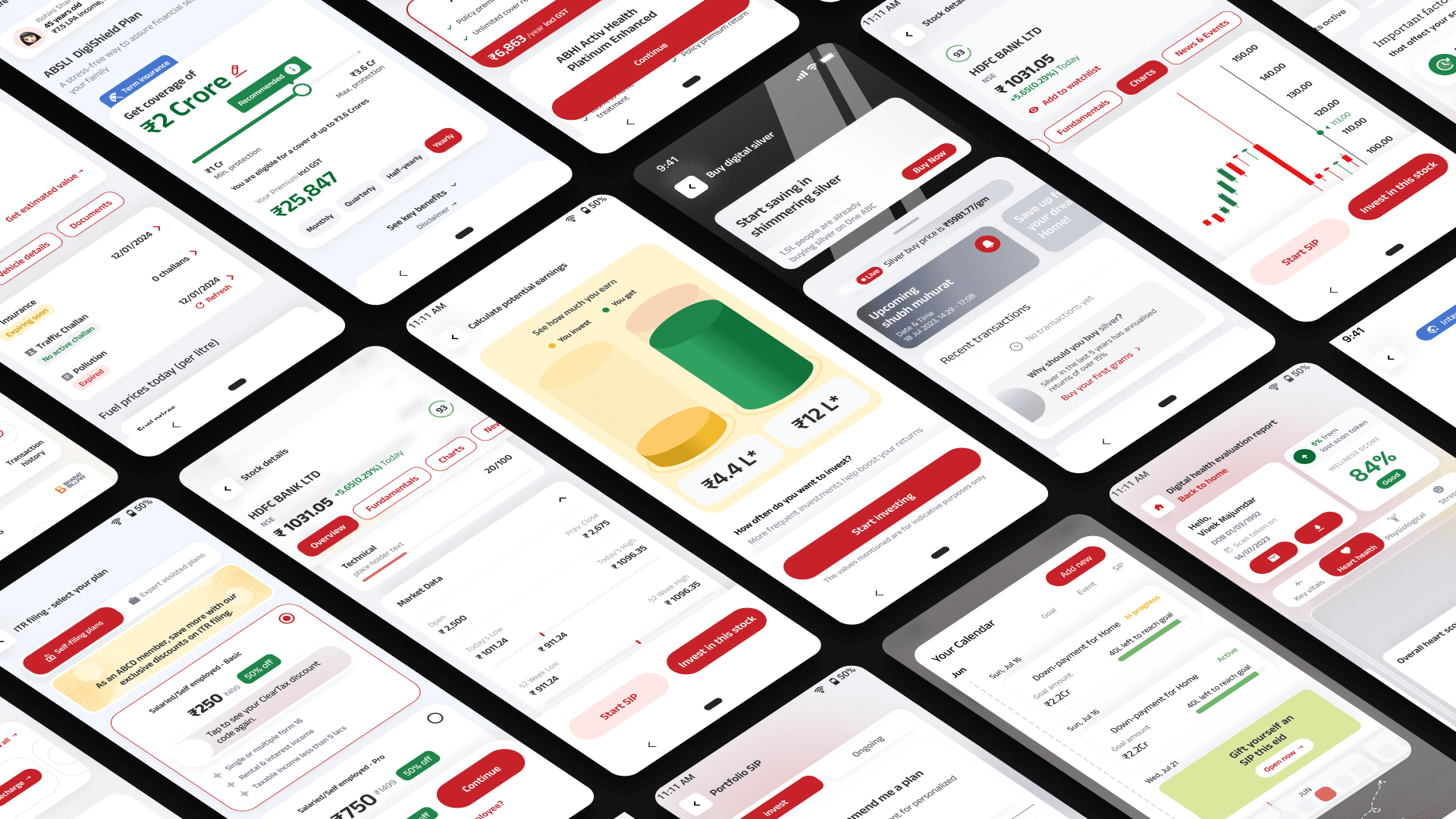
Aditya Birla Capital Digital (ABCD) is a large, multi-product financial platform spanning investments, lending, insurance, and post-purchase servicing. Users enter the platform at very different moments in their financial lives, making consistency and trust critical to long-term adoption.
This project focused on designing and evolving ABCD as a cohesive system, not a collection of isolated screens. The core platform was conceptualised, designed, and launched within the first year, followed by continuous iteration and expansion over the next two years.
Rather than working on a single module, the role evolved into contributing horizontally across the platform—shaping interaction patterns, information hierarchy, and system decisions that could scale across products, teams, and time.
The work required balancing regulatory constraints, business priorities, and user understanding—designing solutions that reduced ambiguity, handled complexity calmly, and aged well as the platform grew.
What I Focused On
Designing end-to-end user flows across acquisition and servicing journeys
Creating interaction patterns for complex, high-consideration decisions
Building and evolving a design system alongside live product development
Ensuring consistency across diverse products without sacrificing flexibility
Designing feedback, error handling, and progressive disclosure to build trust
Outcome & Impact
4.8★ rating across App Store and Play Store
₹39,504 crore revenue attributed to new digital developments
100,000+ downloads within the first month of launch
Recognised as Best in Class User Interface – Fintech at Global Fintech Fest 2024
More importantly, the system continued to support new features and modules post-launch without accumulating design debt—allowing teams to move faster while maintaining coherence.
Key Takeaway
Designing for scale isn’t about making everything identical.
It’s about creating shared clarity—so decisions are easier, experiences feel familiar, and trust compounds over time.
Confidentiality Note
Some details and visuals have been intentionally abstracted. The focus is on approach, decisions, and outcomes rather than artifacts.