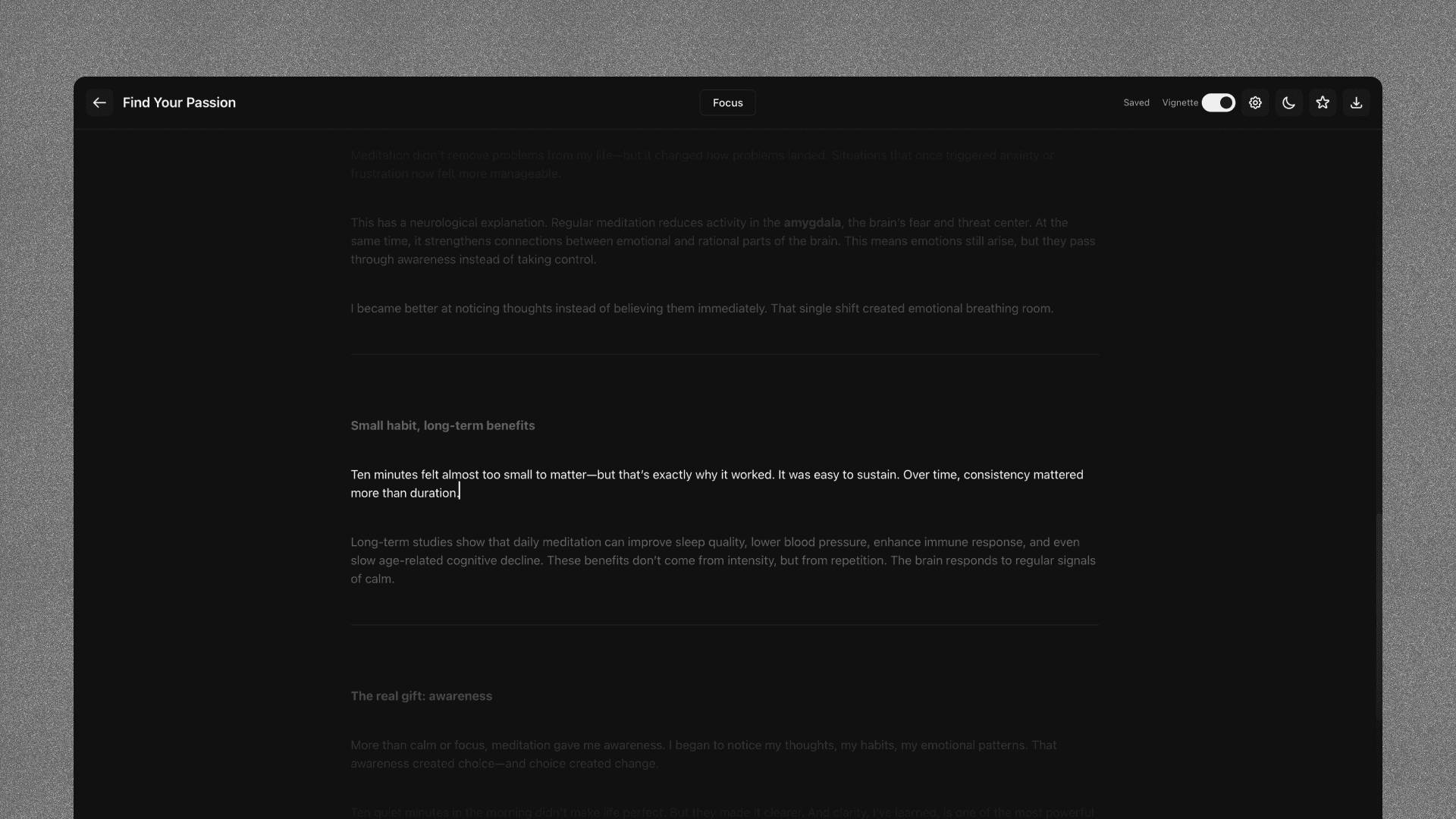
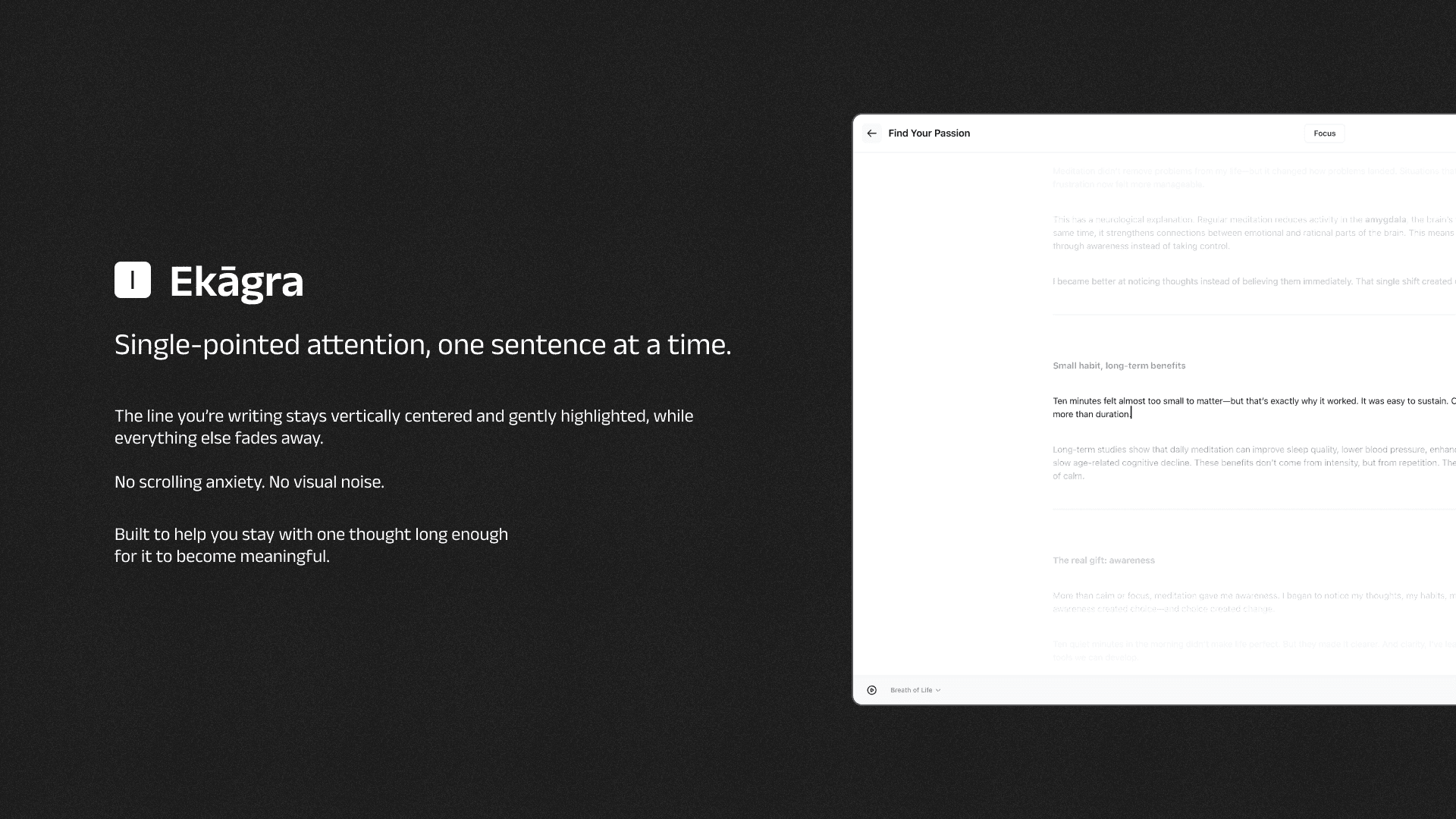
Ekāgra is a self-initiated writing tool built around a simple idea: most editors optimize for features, not for sustained attention. Over time, visual noise, constant decisions, and intrusive tools quietly disrupt flow.
This project explored what a writing experience could look like if it was designed primarily to support focus and continuity, rather than productivity metrics or feature depth.
I worked end-to-end across product thinking, interaction design, and implementation—intentionally keeping scope constrained and decisions deliberate. Every feature was evaluated against a single question: does this help the writer stay with the sentence they’re writing?
What I Focused On
Designing sentence-level focus instead of rigid full-page modes
Creating typewriter-style scrolling for visual and spatial stability
Treating focus as an optional tool, not a forced state
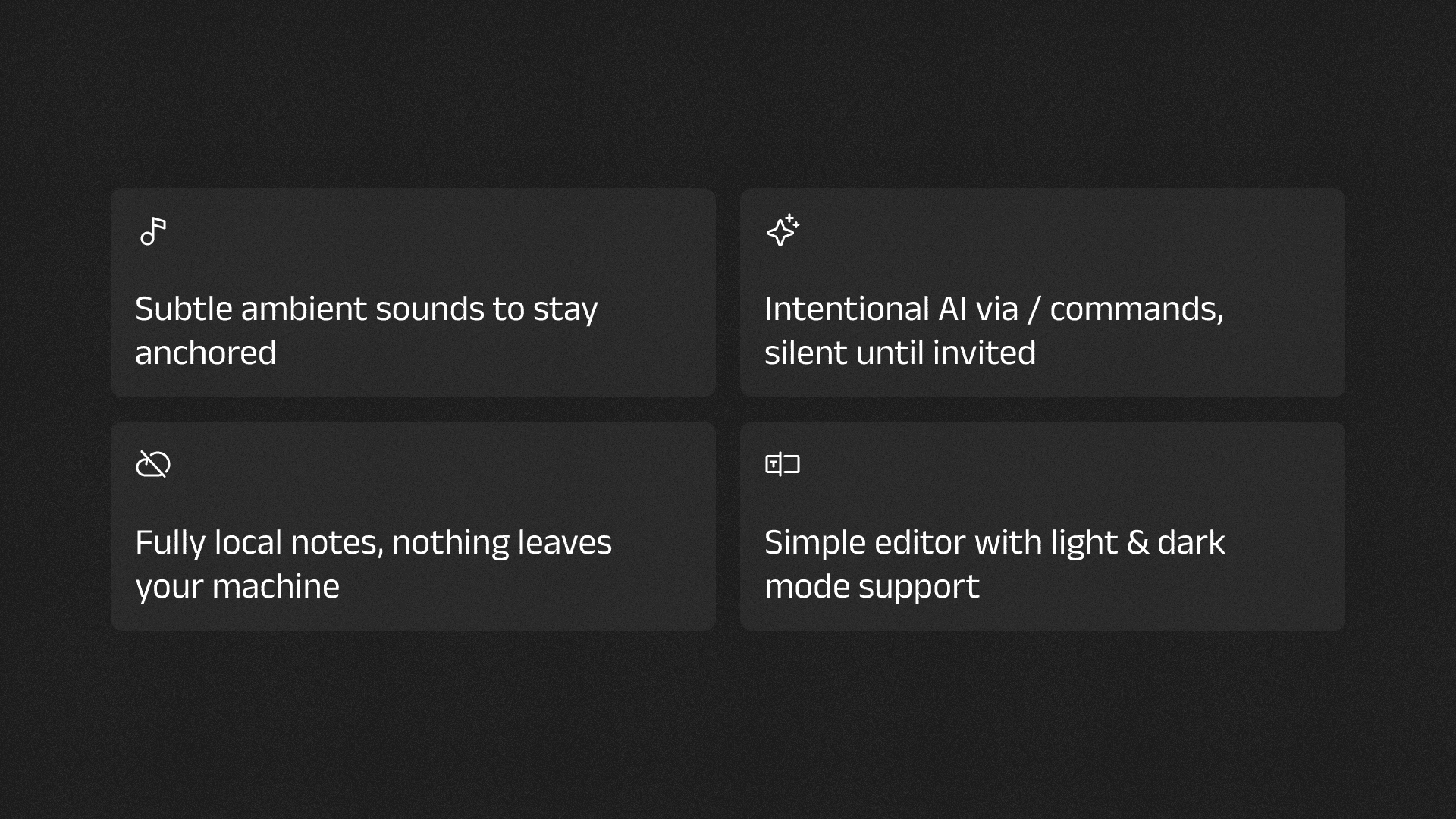
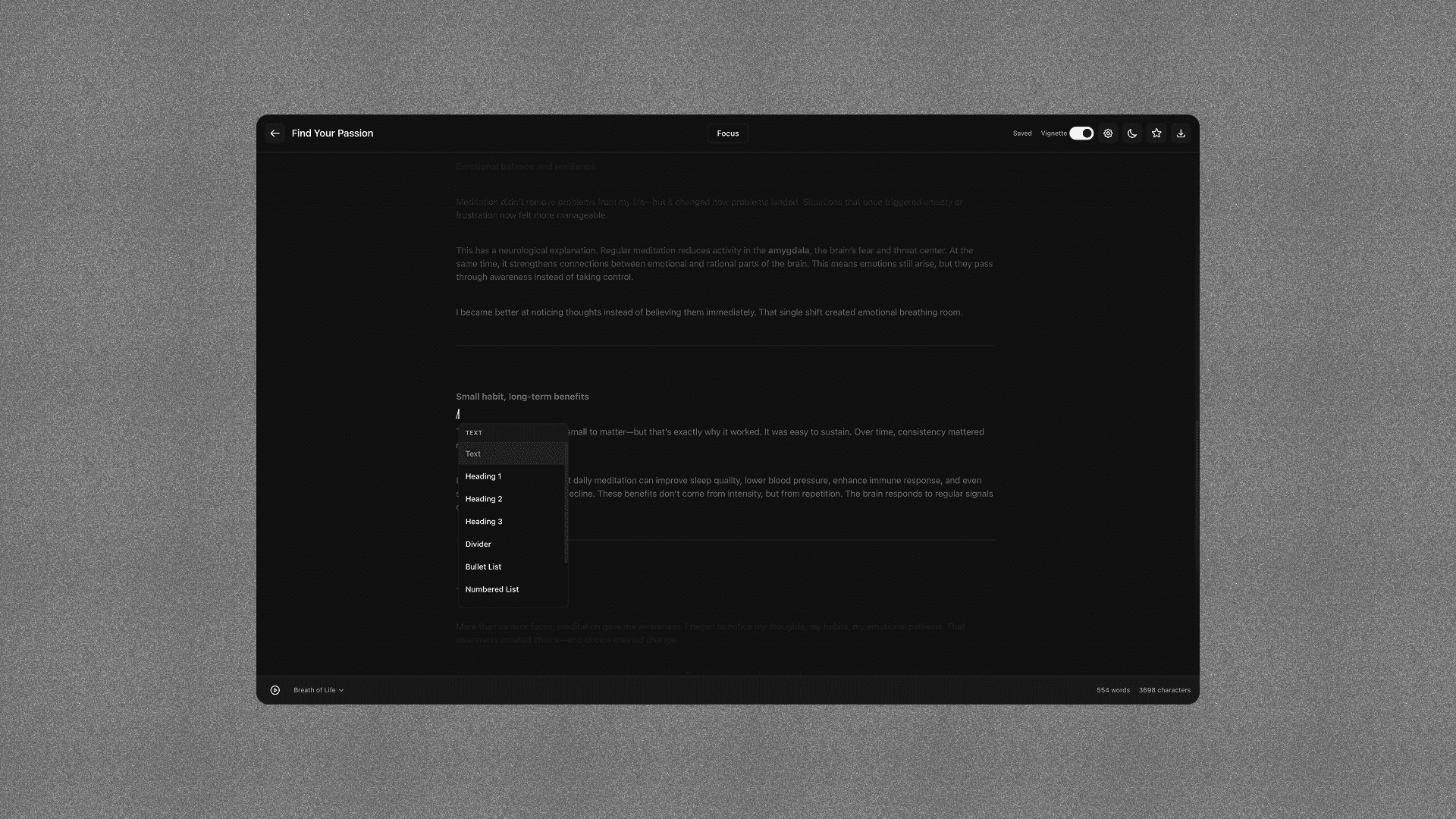
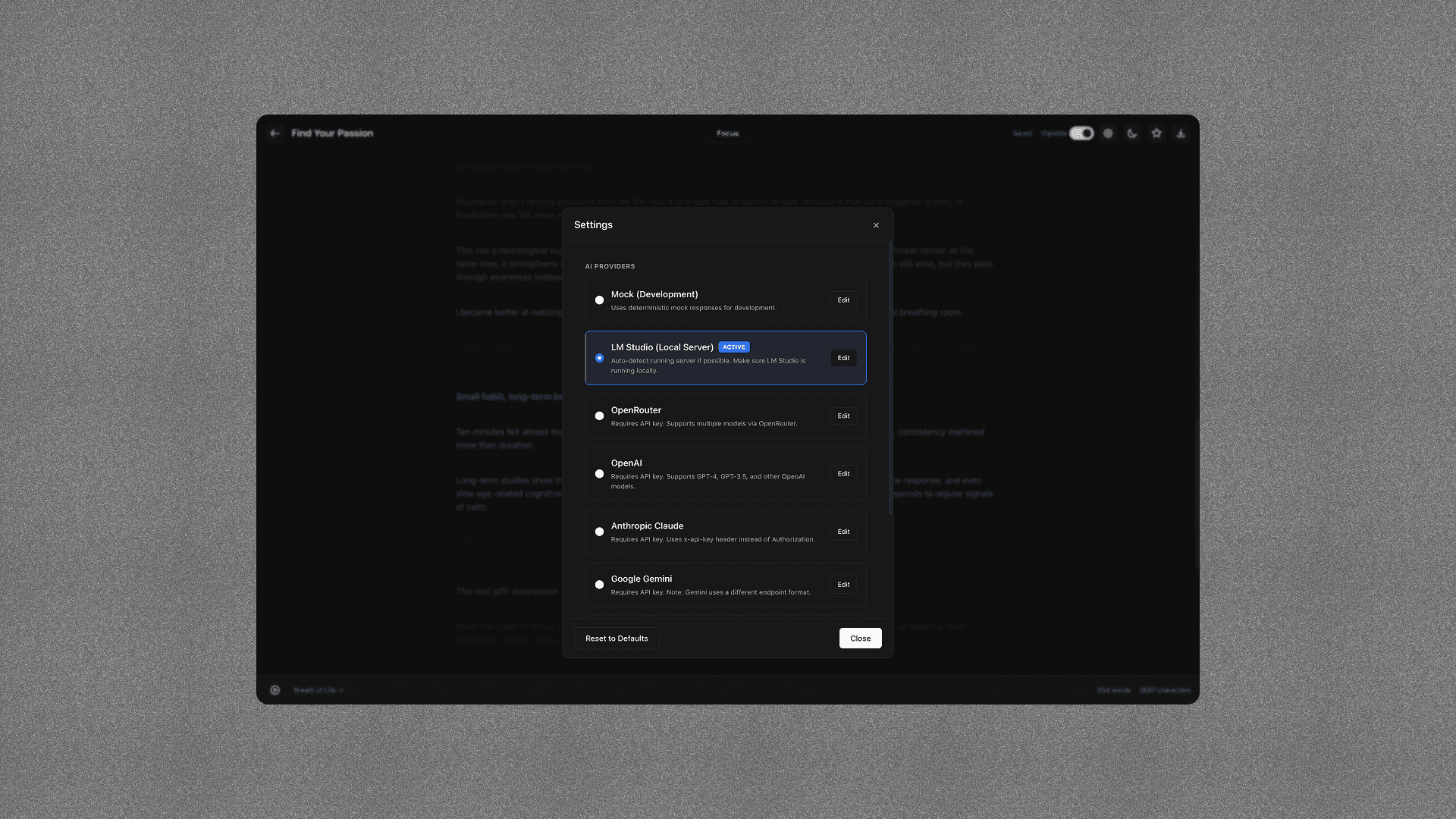
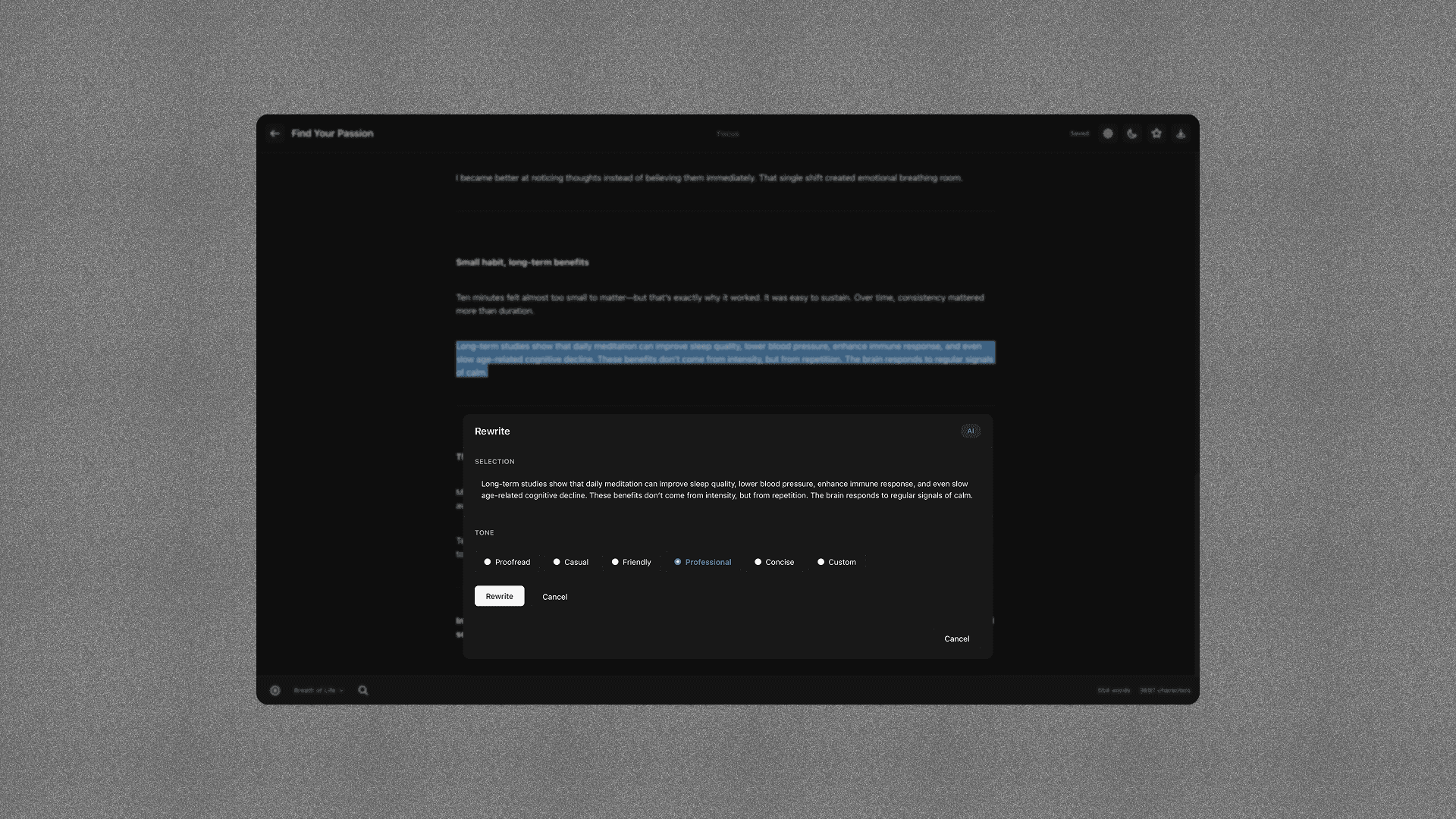
Designing AI assistance that remains explicit and non-intrusive
Building a lightweight, extensible editor architecture
Outcome
A fully functional, cross-platform writing app (Web, macOS, Windows)
A calm, distraction-reduced writing experience validated through personal use and peer feedback
A production-ready, local-first architecture built with long-term maintainability in mind
Rather than optimizing for growth or metrics, Ekāgra serves as a proof of approach—demonstrating how restraint, focus, and systems thinking can coexist with modern tooling.
Key Takeaway
Supporting flow is less about removing features and more about designing when—and how—they appear. Subtle decisions around focus, motion, and feedback often matter more than visible functionality.
Note on Scope
Ekāgra is a personal project and is not affiliated with my current employer. All design and implementation decisions were made independently.