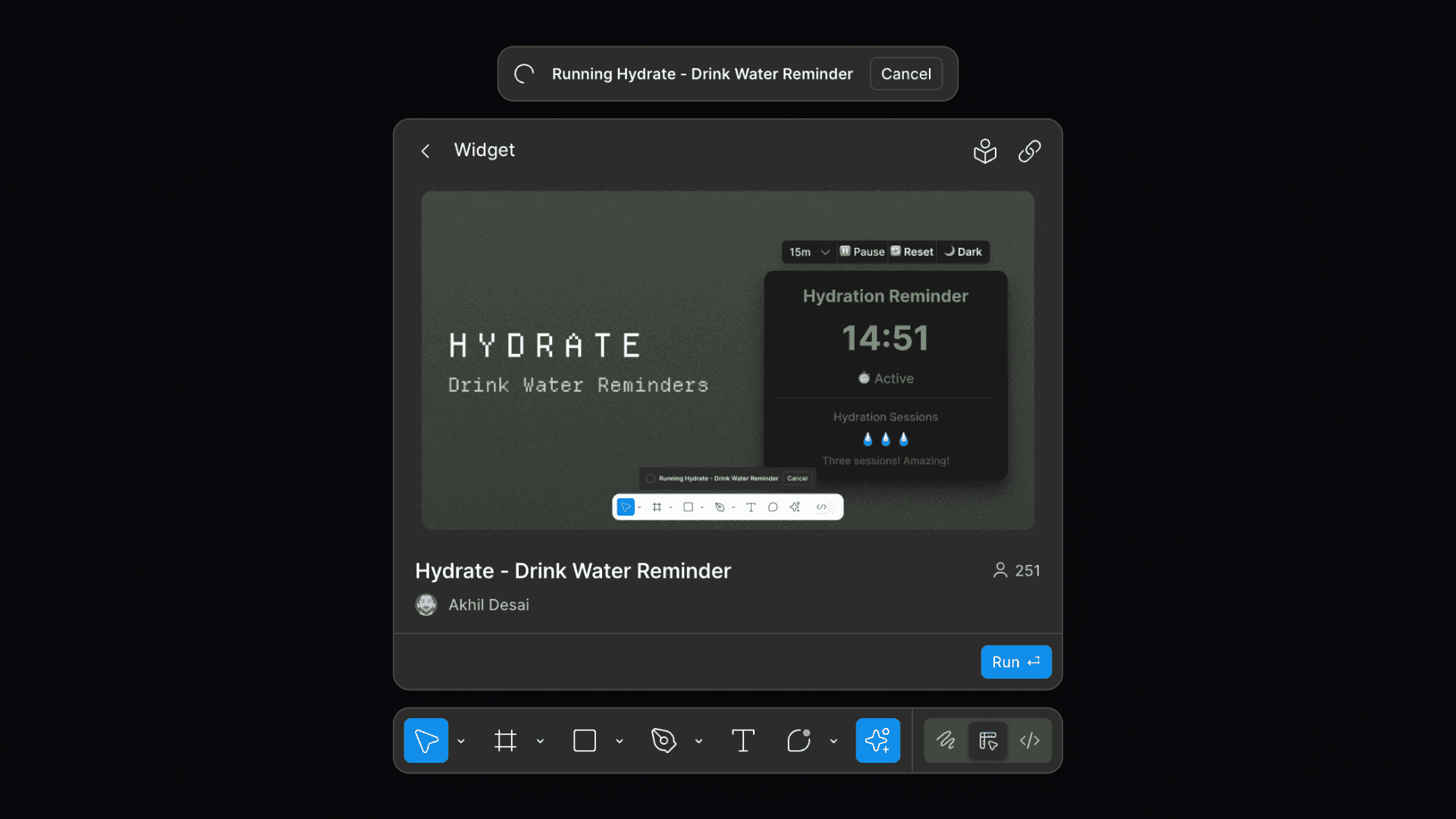
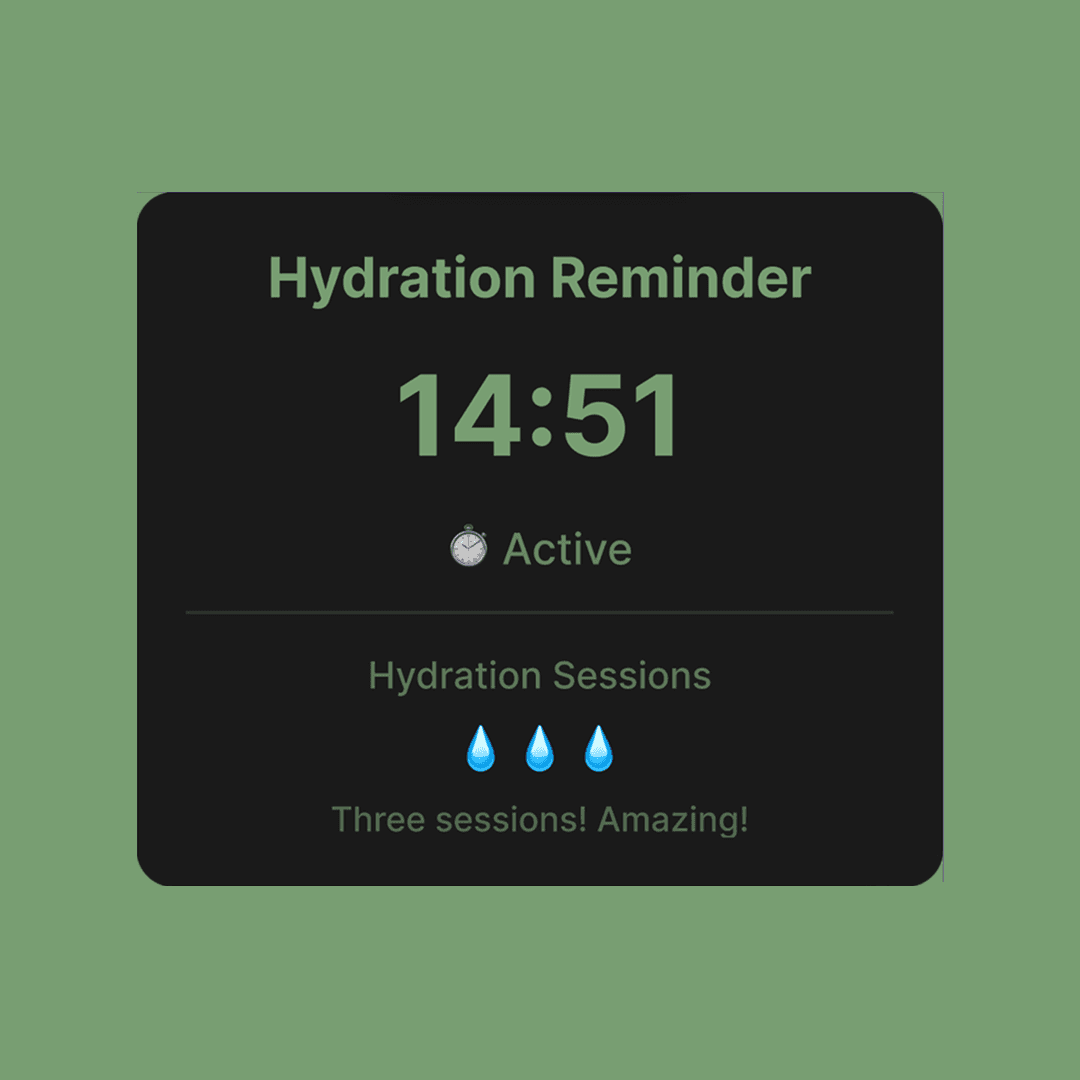
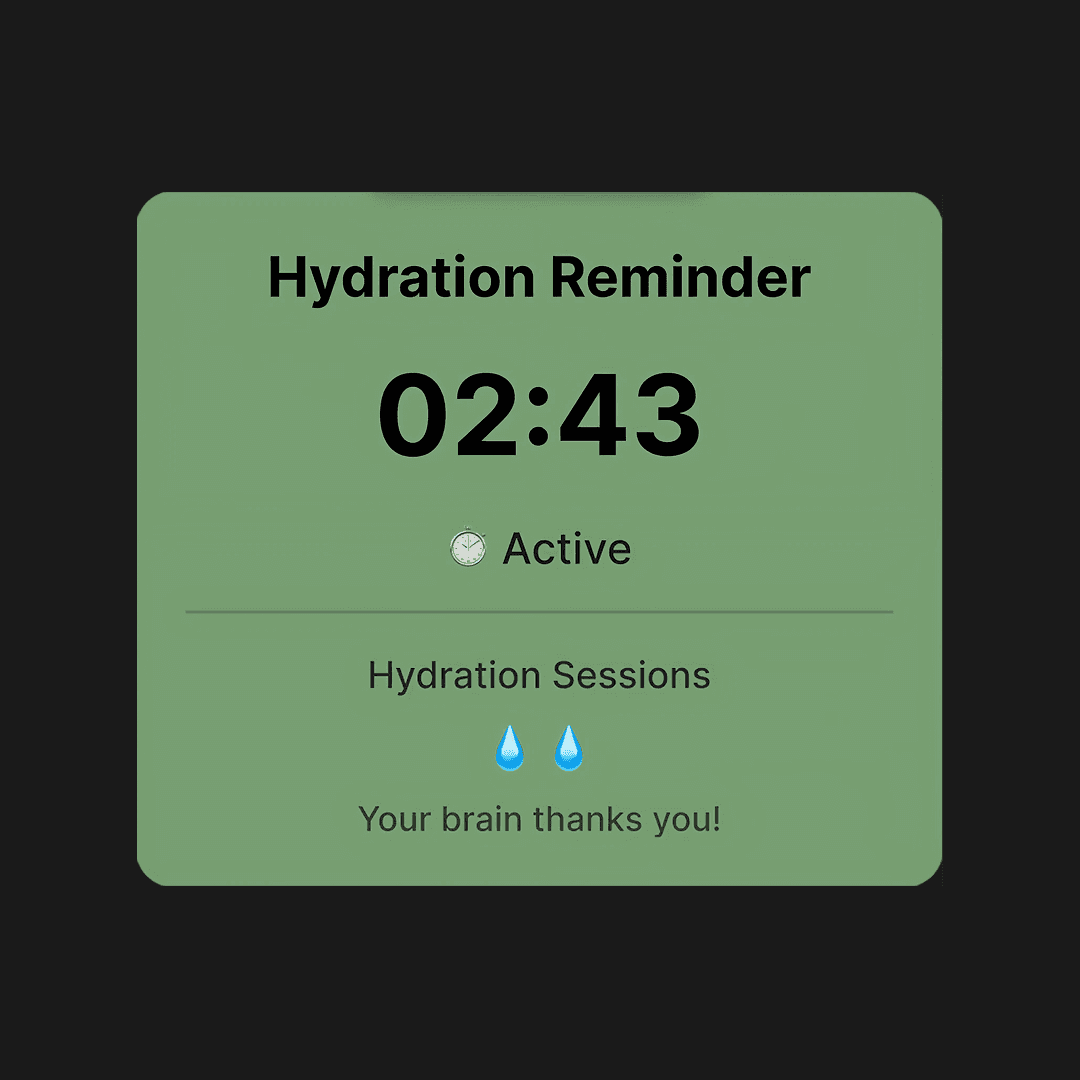
Hydrate is a self-initiated Figma widget designed to support a simple but often neglected habit: drinking water during long, focused work sessions.
Instead of relying on external notifications or guilt-driven reminders, Hydrate lives directly inside the design canvas. The goal was to introduce gentle, optional nudges that support wellbeing without breaking flow or pulling users away from their work.
This project focused on designing a micro-experience—one that blends into the workspace, respects attention, and encourages habit formation through presence rather than pressure.
What I Focused On
Embedding habit support directly inside the creative workspace
Designing reminders that feel encouraging, not enforcing
Avoiding streaks, penalties, or loss-based motivation
Using calm visuals to represent progress without performance pressure
Keeping interactions shallow and instantly understandable
Outcome
Organic adoption by designers across teams and geographies
Consistent user feedback highlighting the non-guilting tone
Featured on Product Hunt and Peerlist as a wellness-first utility
A lightweight, performance-safe widget that blends into long work sessions
More than usage metrics, Hydrate validated the idea that small, well-placed interventions can meaningfully improve everyday work habits.
Key Takeaway
Habits are emotional systems. Designing for them requires restraint, empathy, and respect for attention—not pressure or performance framing.
Note on Scope
Hydrate is a personal project and is not affiliated with my current employer. All design and implementation decisions were made independently.